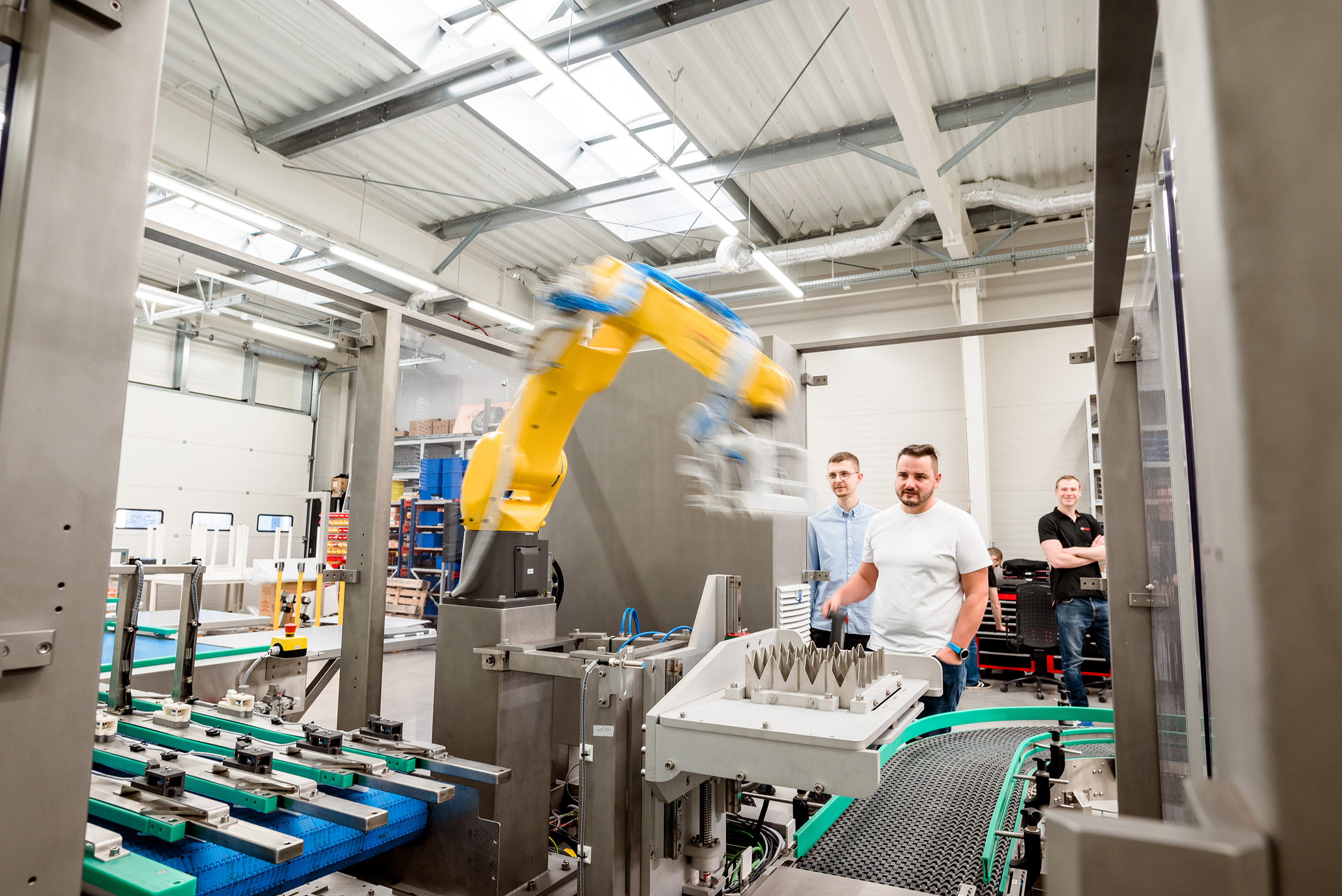
Picture the moment you start up a new robotic cell and everything runs without the slightest hitch. No collisions, no errors in the control logic, and no need to patch code on the shop floor at night with deadlines closing in. To many, that sounds like an engineer's fantasy — at Hitmark Robotics, we turn it into everyday practice. The tool revolutionising this process, and taking production to a new level of efficiency, is the digital twin.
Before we get to the operational benefits, let's cover the basics: what exactly is a digital twin? It is nothing less than an advanced virtual copy of a machine, a line or an entire system, one that dynamically mirrors the state of its physical counterpart. The critical ingredient here is real-time data: through sensors, communication protocols and control systems, it allows the model to "feel" what is actually happening on the shop floor.
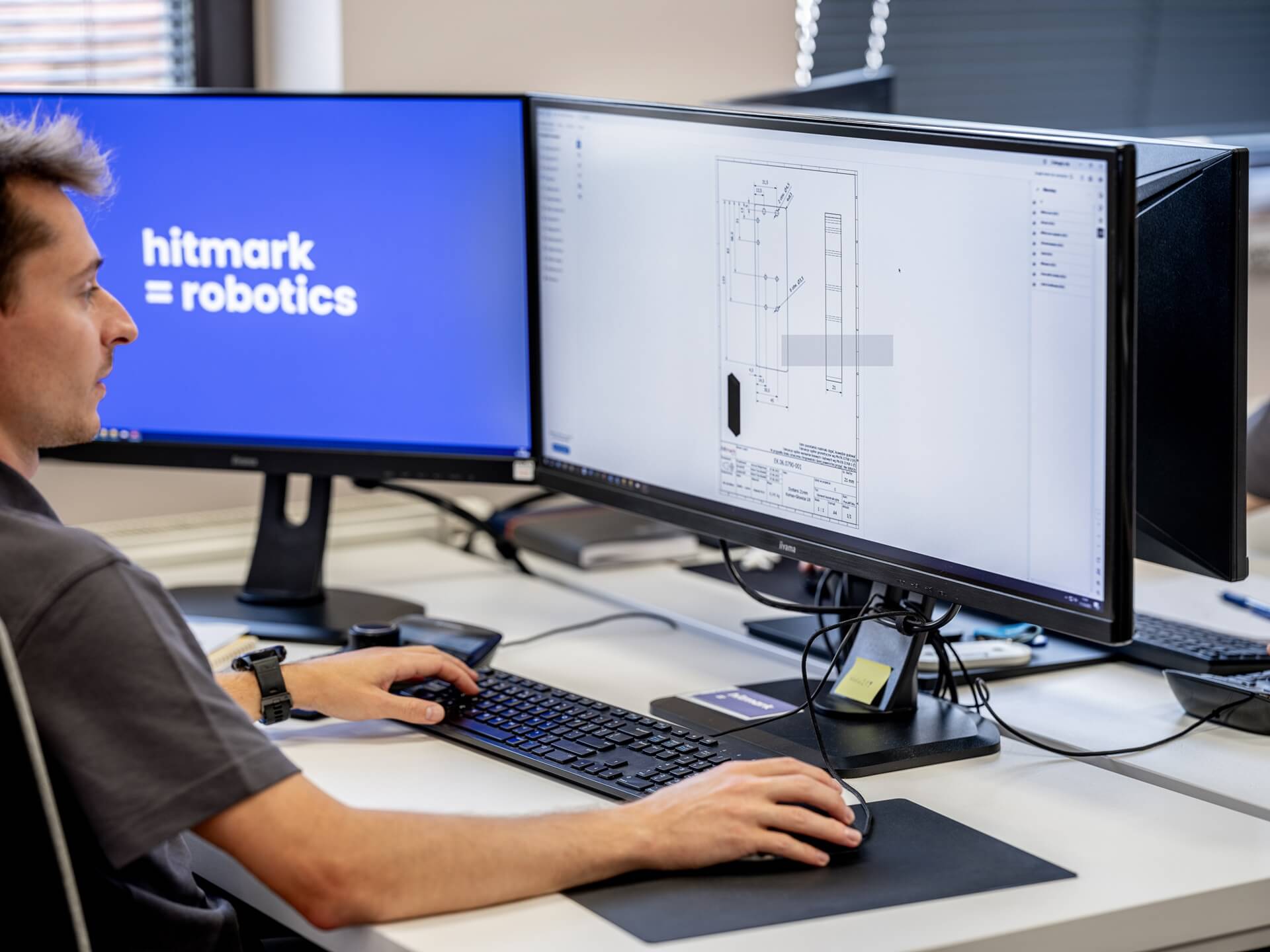
Unlike ordinary 3D mock-ups, a digital twin in industry is not merely there to give the board something to look at. It is a fully fledged test environment that shows how the system will respond to a change in parameters, an operator error, or new, irregular product variants. In an era where automation and robotisation decide who holds the market advantage, this technology lets you bring mechanics, electrics and software together virtually — before a single component is ordered from a supplier. So how does a digital twin work in production? It acts as an intelligent circuit breaker for your budget, eliminating errors at the stage where fixing them costs nothing more than a few mouse clicks.
In conversations with investors, the question of how a digital twin differs from a simulation comes up again and again. The two are often confused, but the distinction is fundamental. A classic 3D simulation of production processes is usually a static conceptual model. It works like a photograph: it captures reality at the moment it was taken (at the quotation stage, for instance), but once mechanical changes are made to the line it quickly goes out of date and becomes useless.
A digital twin in production, by contrast, is a living, two-way process. Thanks to solutions such as IoT integration, the virtual model is continuously fed with data, which makes it possible to:
This is the foundation on which the modern Industry 4.0 digital twin rests, optimising TCO across the machine's entire life cycle. The investment in this model pays for itself with the very first avoided downtime.
A standard digital twin deployment in a manufacturing business strikes at the greatest weakness of traditional projects: the delays that come from working sequentially, in a straight line. Typically, the programmer waits for mechanical assembly to be physically finished, which drastically pushes back the handover date of the line and generates needless costs in tied-up capital.
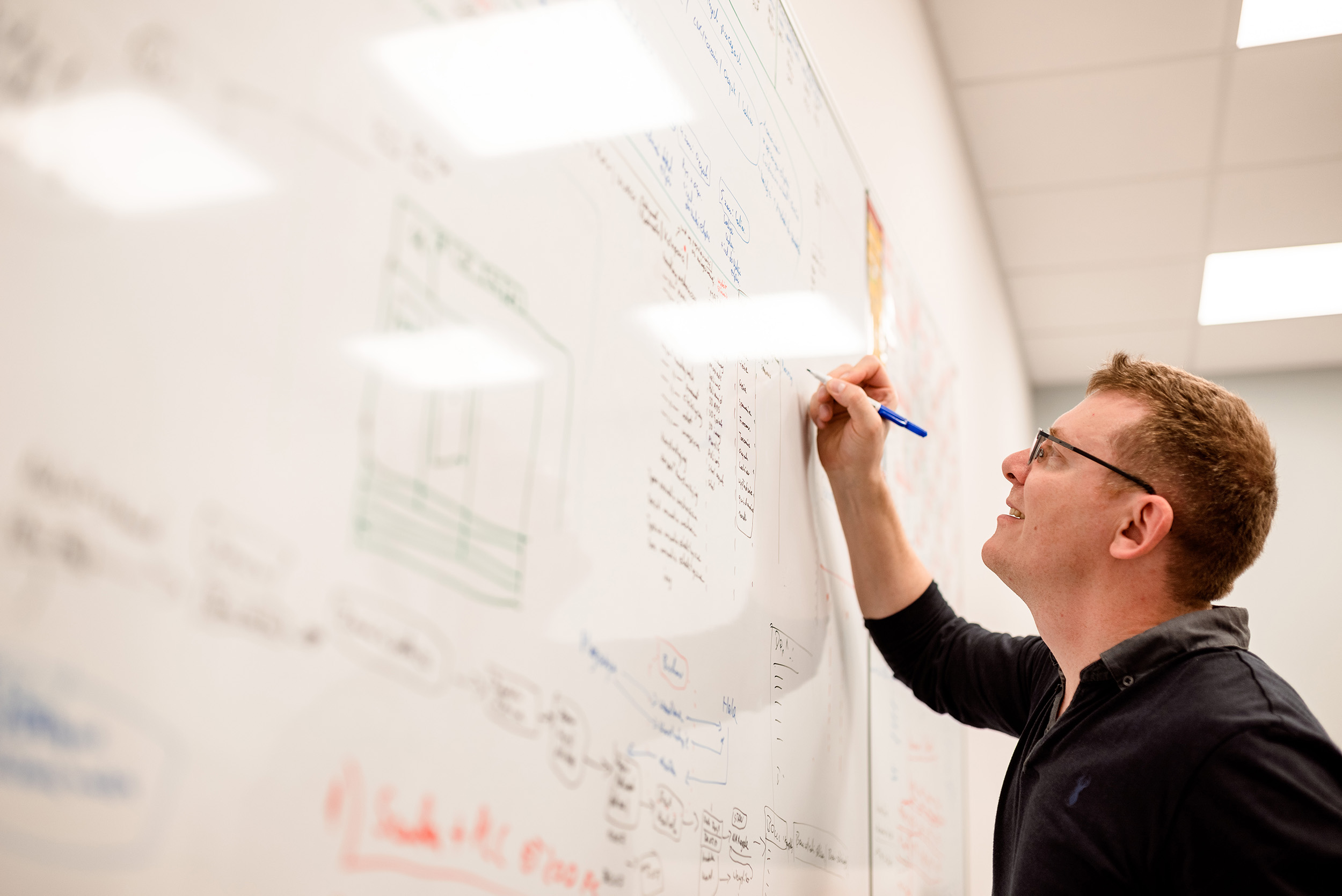
Virtual commissioning turns that logic completely on its head. At Hitmark Robotics we use offline robot programming, which lets us test PLC code and machine movements in parallel with the physical build in the workshop. When we spot a fault in the robot arm's reach virtually, we fix it there and then, saving the time we would otherwise lose to mechanical corrections at the client's plant. The result? The way a digital twin shortens deployment times shows up in hard figures: commissioning takes up to 30% less time, allowing plants to generate ROI from a new investment sooner.
The greatest source of stress for an investor is a design fault discovered only during start-up at their own site. To avoid what the industry calls "commissioning hell", testing the production line virtually is essential. Thanks to the advanced technology of pre-deployment production simulation, we are able to verify:
Reducing the risk of automation projects means eliminating errors in the safety of the design office — not on the shop floor with the downtime counter running, where every minute costs thousands of euros.
In our approach, the digital twin finds an application in every element of a project, from simple palletising to complex precision assembly. We use industrial process modelling to give the client hard evidence of the effectiveness of the solutions we propose — not merely visual promises. Simulating the work of an industrial robot allows us to optimise production before the investment is made, giving managers full control over the future financial outcome. Simulation in production automation is a standard here: one that guarantees the client peace of mind and a perfect fit between technology and the plant's needs.
Does implementing a digital twin require replacing the entire machine park? No. These systems can be integrated with an existing machine park (Siemens, Fanuc, ABB, Beckhoff). The key is smooth IoT integration, which makes it possible to pull data even from older PLC controllers using suitable communication gateways and protocols such as OPC UA.
What is the most effective way to shorten the start-up time of a robotic line? The best approach is to test the robots in a virtual environment before they are physically shipped to the plant. Assembly at the client's site then becomes a swift verification of a finished, previously proven system — rather than a testing ground for programmers.
Is this solution only for large automotive corporations? That is a myth we actively work against. Deploying a digital twin in production is now well within the financial reach of the SME sector. The cost of building a virtual model is a fraction of the losses generated by design faults, or by a single week of unplanned line stoppage.
In automation there is no room for guesswork or "it'll be fine on the day". Choose digital twin technology, which turns uncertainty into measurable data and real profit. At Hitmark Robotics we will guide you through the process of digital transformation, from advanced simulation to an efficient, ready-to-run automated system on your shop floor.
Want to know how to shorten the start-up time of your new line? Get in touch and see what we can do » hitmarkrobotics.com