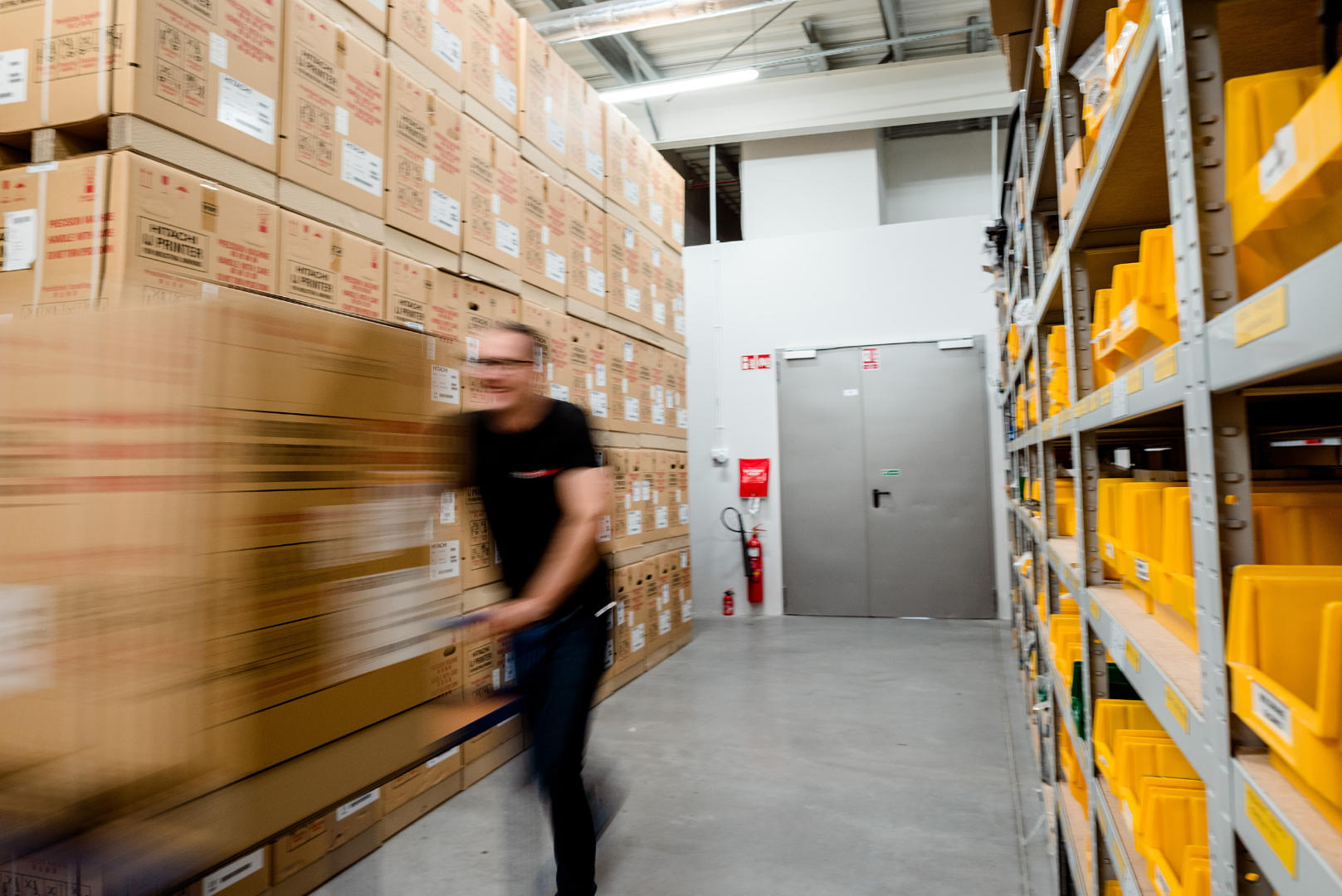
Inter-operational transport is one of the key elements of how modern manufacturing plants function. In every factory, materials, semi-finished products, and components must be regularly moved between subsequent stages of the technological process—from the raw materials warehouse, through production workstations, to packaging and shipping.
In many companies, internal transport is still carried out using forklifts or manual operator work. Although such solutions are common, at larger production scales they often begin to limit process flow. Delays in delivering materials, queues at workstations, or a lack of synchronization between departments can lead to unnecessary downtime and reduced efficiency of the entire production line.
For this reason, more and more companies are analyzing the possibilities of automating inter-operational transport, with particular interest in autonomous mobile robots (AMR). Unlike traditional transport solutions, these robots can move independently around the production hall and adapt their routes to the current situation on the shop floor.
In many manufacturing plants, efficiency problems do not result from machine performance but from the organization of material flow. Even modern technological lines may operate below their capacity if products do not arrive at subsequent workstations on time.
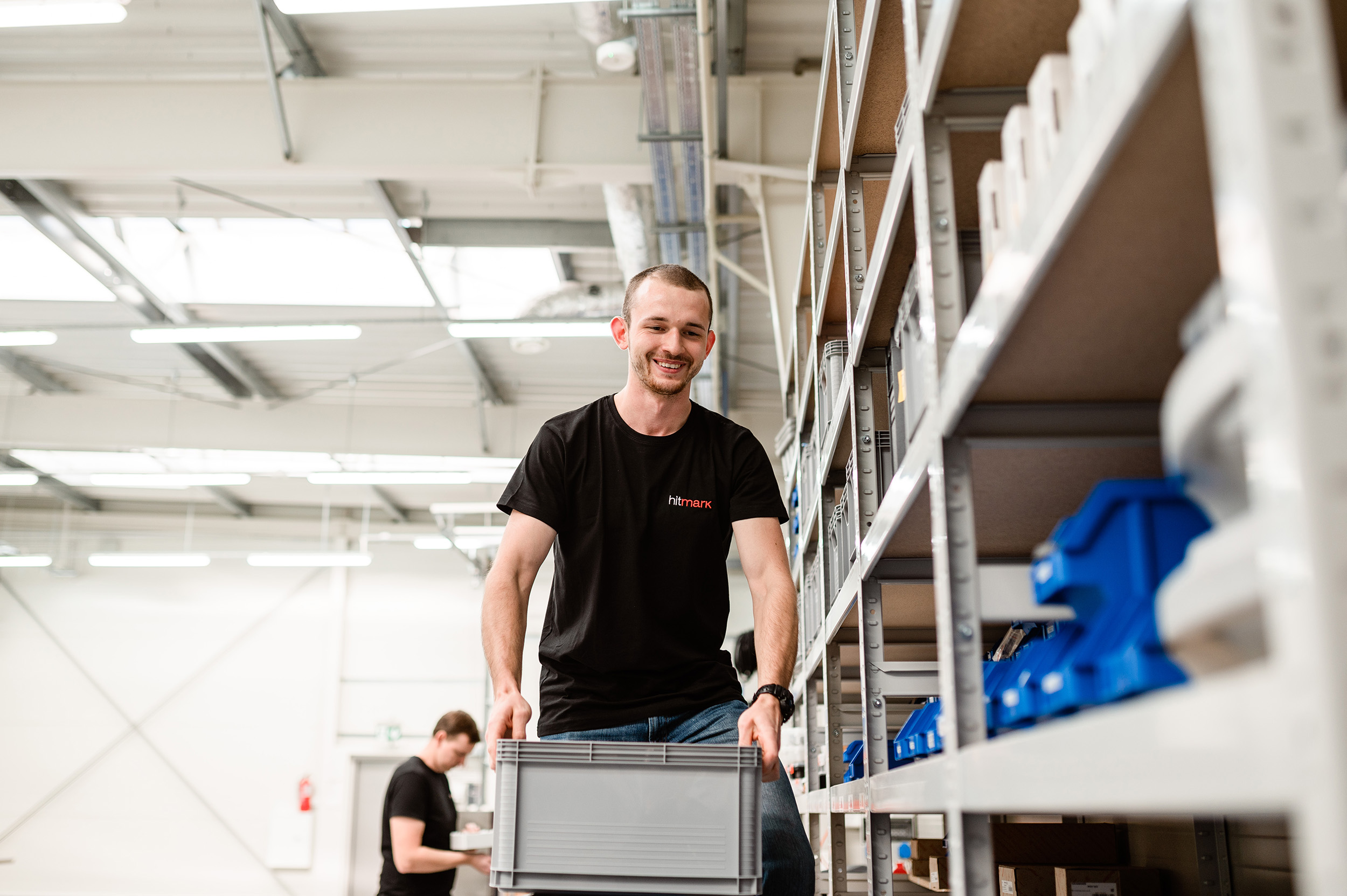
In practice, this means operators often wait for materials to be delivered or for finished components to be collected. Such interruptions are usually short and difficult to notice in everyday work, but across an entire shift they can significantly reduce production efficiency.
That is why, in many companies, analyzing internal logistics becomes one of the first steps when the question arises of how to reduce downtime in production and improve the smooth operation of technological lines.
Autonomous mobile robots are transport systems designed to operate in dynamic production environments. Unlike traditional AGV vehicles, they do not require guiding infrastructure such as floor-embedded wires or tapes.
AMR robots use spatial scanning and environmental mapping systems, allowing them to independently plan their routes and avoid obstacles. This enables flexible use of robots in different parts of a facility and allows the transport system to be easily adapted to changes in production organization.
As a result, robots can perform transport between production workstations, the warehouse, and the packaging area in a continuous and predictable manner, without the need to involve operators.
Although mobile robots are becoming increasingly accessible, their implementation should be preceded by an analysis of the plant’s real needs. Automating inter-operational transport brings the greatest benefits where material flow is frequent and repetitive.
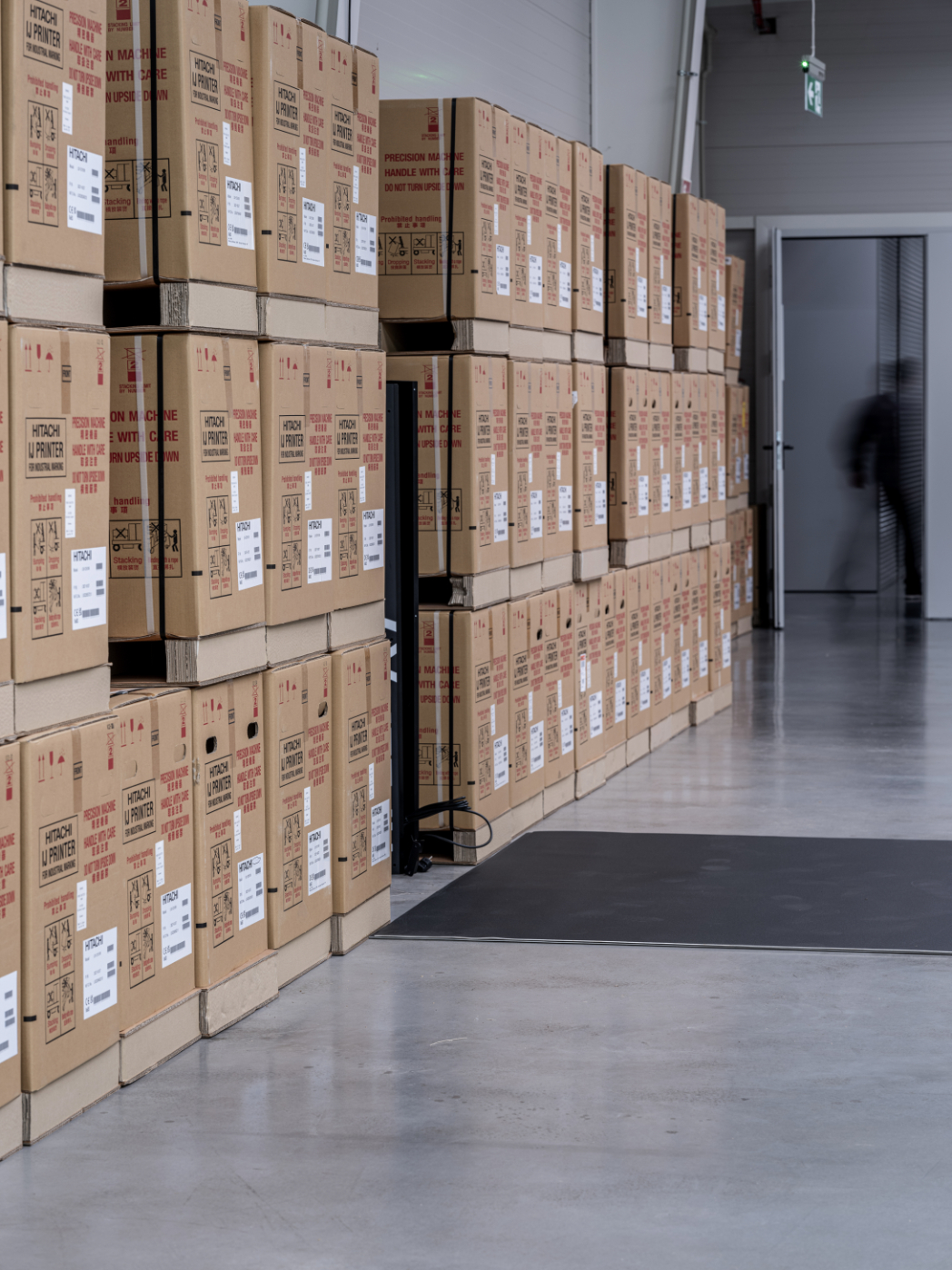
AMR robots work particularly well in plants where materials must be regularly transported between distant production stations or different departments. In such environments, automation helps reduce dependence on operator availability and improves the predictability of logistics processes.
Implementing this technology also makes sense in companies operating in multi-shift systems, where the transport of components takes place almost around the clock. In such cases, mobile robots can take over repetitive transport tasks and relieve employees of routine operations.
In many manufacturing plants, differences in efficiency result not so much from production technology but from the organization of logistics processes. Inter-operational transport often determines whether a technological line operates smoothly.
In practice, this becomes particularly visible when comparing different companies. In some factories, production lines maintain a very high utilization rate, while in others their potential remains underused. An analysis of such cases often leads to the question: why do some companies achieve even 90% efficiency, while others stop at around 60%?
Very often, the answer lies in the way material transport is organized and how well logistics is synchronized with the production process.
Autonomous mobile robots can help organize this area in many situations, as they carry out transport in a repeatable manner and according to the production schedule.
Implementing AMR robots should be part of a broader approach to improving production processes. Before a company decides to invest in transport automation, it is worth carefully analyzing the current material flow and identifying the areas where the greatest time losses occur.
It often turns out that simply reorganizing transport routes or changing the way deliveries between workstations are planned can significantly improve production flow. Only on this basis can it be determined where automation will bring the greatest benefits.
This approach is consistent with a broader production improvement strategy that assumes gradual enhancement of process organization. In many companies, analyzing inter-operational transport becomes one of the first stages when production optimization begins and when organizations look for ways to avoid costly investment mistakes.