In many manufacturing companies, the decision to implement robotization is still perceived as a bold technological step. Managers wonder whether investing in industrial robots will truly bring the expected benefits or whether it may turn into a costly experiment. Questions arise about profitability, the impact on work organization, and whether the company is ready for such a change.
At the same time, the realities of modern industry are changing very rapidly. Labor costs are increasing, it is becoming more difficult to find workers for repetitive production tasks, and the pressure for efficiency and supply stability is greater than ever before. Under these conditions, more and more companies are beginning to realize that the biggest threat is no longer robotization itself, but continuing to rely exclusively on manual processes where technology could significantly improve them.
It is therefore worth looking at automation from a different perspective. Instead of asking whether robotization is risky, companies increasingly need to ask a different question: what risk does a company take by not implementing it?
A dozen or so years ago, industrial robots were mainly associated with large automotive factories or facilities operating at a very high production scale. Implementing a robot meant a complex technological project and large infrastructure investments.
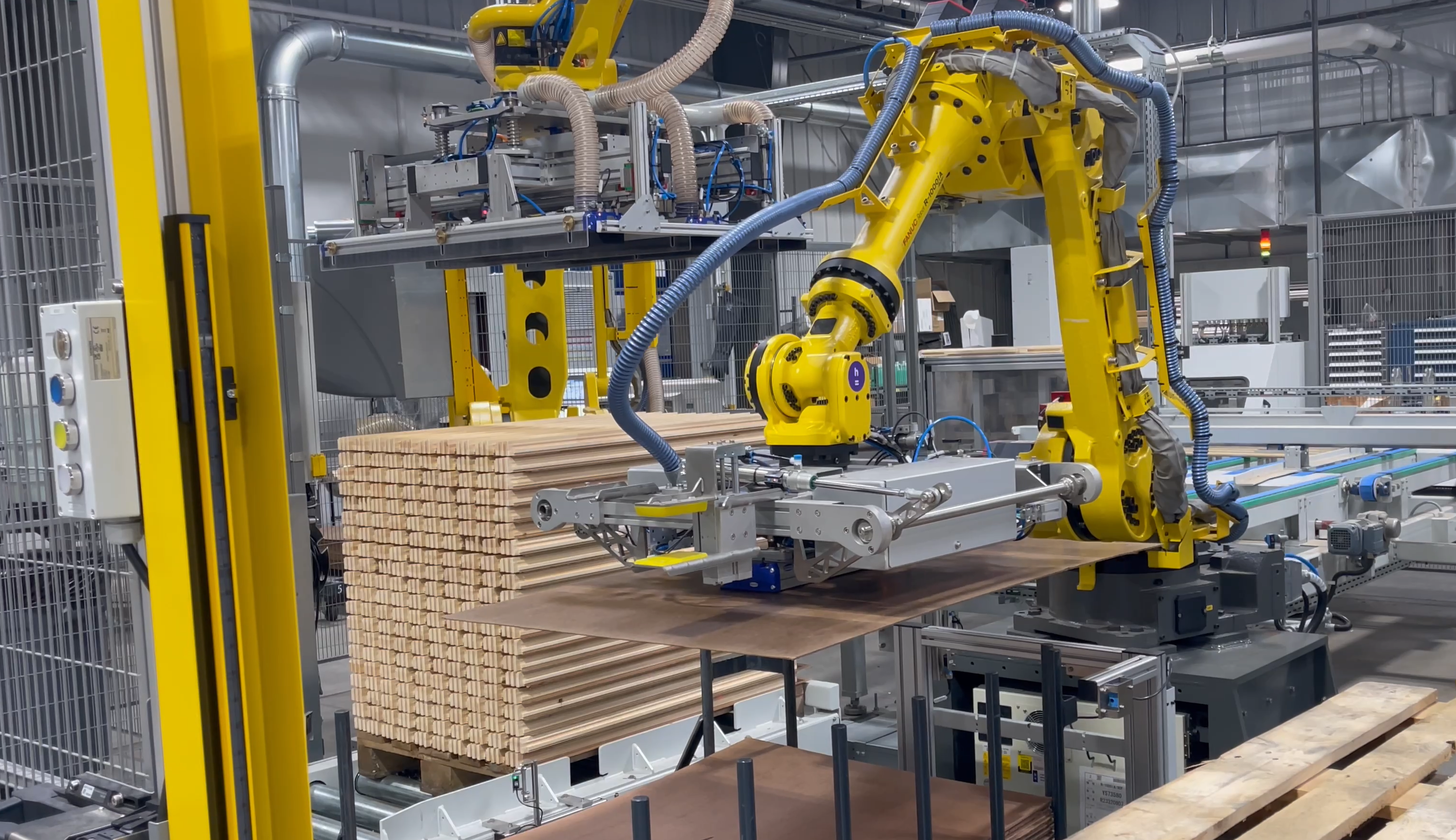
Today the situation looks completely different. The development of robotic technologies and the experience of integration companies have made automation accessible to a much wider group of enterprises. Industrial robots are more flexible, easier to integrate with existing production lines, and increasingly designed for specific applications such as packaging, palletizing, or machine tending.
The development of collaborative robots and ready-made robotic systems dedicated to specific production processes has also played a significant role. Thanks to this, implementing automation no longer has to mean building an entirely new production line.
In many plants, robotization begins with a single workstation that takes over the most repetitive tasks. Over time, the system can be expanded and adapted to growing production needs.
As a result, robots are no longer seen as technological curiosities. In many industries, they are becoming a standard tool for organizing production.
One of the most important factors changing the perception of robotization is the rising cost of labor in industry. In recent years, wages in the manufacturing sector have steadily increased, and along with them the costs borne by employers.
In many cases, maintaining a single workstation in a shift system involves much more than just salary. Employers must also account for social contributions, training, recruitment costs, employee turnover, and periods of absence.
If a production process relies entirely on manual labor, the cost of operating it increases proportionally with production growth. Higher output means the need to hire more employees, which increases operational costs.
A robot operates under a completely different economic model. After the investment is implemented, the cost of its operation does not grow linearly with production volume. The same robotic system can handle higher output without the need to increase staffing levels.
For this reason, in many repetitive processes, robotization is no longer a technological luxury. It becomes a way to control production costs over the long term.
Another important factor is the situation in the labor market. In many regions, manufacturing companies are increasingly facing difficulties in finding employees for simple, repetitive tasks performed on production lines.
This particularly affects shift work and positions that require monotonous or physically demanding activities. Under such conditions, companies often struggle with high employee turnover and difficulties maintaining stable staffing on production lines.
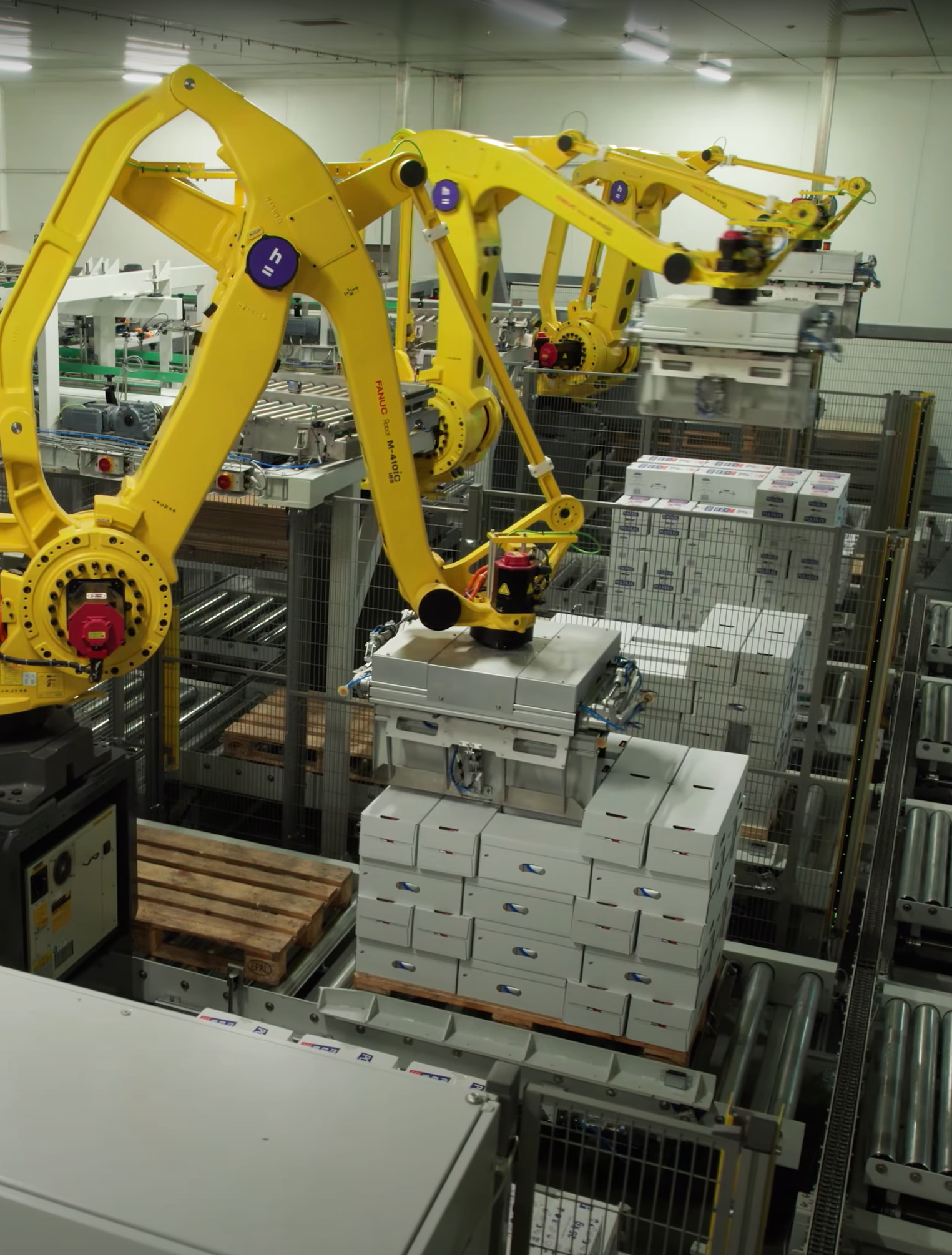
Even short-term staff shortages can affect production efficiency. If operators responsible for packaging products or palletizing cartons are missing, the pace of the entire technological system begins to decline.
Robotization can stabilize the most repetitive processes in such situations. A robot is not dependent on employee availability, does not require breaks or replacements, and can work continuously according to the production schedule.
As a result, companies can reduce operational risks related to workforce shortages.
In many manufacturing sectors, a company’s competitiveness depends largely on the efficiency of its technological processes. Even small differences in production performance can translate into significant differences in unit costs over time.
It often happens that a modern production line operates below its potential not because of technological limitations but due to the organization of work at the final stages of the process. Product packaging, carton assembly, or palletizing are often performed manually and become bottlenecks for the entire line.
Industrial robots allow companies to maintain a consistent and predictable pace of work in such situations. A robotic system can operate at a defined productivity level throughout the entire shift without slowdowns caused by operator fatigue.
As a result, the production line can utilize a greater portion of its technological potential.
Over time, this translates into greater production stability, easier supply planning, and improved competitiveness for the company.
One of the reasons companies postpone robotization decisions is the focus on investment costs alone. The price of a robot and the entire robotic workstation is immediately visible, while the costs of the current manual process are often dispersed and harder to estimate.
However, manual processes generate many hidden costs. These may include human errors, production losses, the need for rework, or downtime resulting from a lack of staff.
There are also productivity limitations. If manual packaging or palletizing cannot keep up with the speed of the technological line, the company effectively loses part of its production potential.
In such situations, automation should be viewed not only as an investment cost but also as a way to reduce losses resulting from the current organization of the process.
Only by comparing these two perspectives can the real profitability of robotization be properly assessed.
In the past, implementing industrial robots was indeed associated with greater technological risk. Systems were more complex, and experience in designing robotic workstations was much more limited.
Today the situation is different. Robotic technologies are well proven in many industries, and integration companies have gained extensive experience through numerous implementations.
Before starting an investment, companies can conduct production process analysis, performance simulations, and return-on-investment calculations. This allows businesses to estimate potential benefits and risks even before the project begins.
In many cases, automation is also implemented gradually. A company may start with a single robotic workstation and expand the system to other areas of production once experience has been gained.
This approach makes robotization a process of gradual factory development, rather than a one-time technological leap.
More and more companies now treat automation not only as a way to improve a single process but also as part of a long-term production development strategy.
Robotization allows production scale to increase without a proportional increase in employment. It also helps maintain stable product quality and predictable production line performance.
In many industries, this is becoming a key factor of competitiveness. Companies investing in modern production systems can respond faster to changes in demand and better control operational costs.
This does not mean that every process in a factory must be automated. However, companies increasingly analyze their production processes to determine which of them could be performed more efficiently with the help of robots.
A dozen years ago, a robot in a factory (for example, a cobot) could be perceived as a bold technological investment. Today, in many industries, the situation looks different.
Rising labor costs, workforce shortages, and growing competition mean that companies must constantly seek ways to increase production efficiency and stability.
Under such conditions, relying solely on manual processes may lead to the loss of competitive advantage. Companies that automate repetitive production tasks are able to maintain higher efficiency and better prepare for future market development.
For this reason, more and more enterprises are concluding that robotization is no longer a technological experiment. It is becoming a natural stage in the development of modern manufacturing — and in many cases, a key element in building a company’s long-term competitiveness.