In many companies planning production automation, the greatest attention is given to selecting the robot. Its payload, working reach, manufacturer, and technical parameters are analyzed. Although these are obviously important factors, in practice the success of the entire project is far more often determined by something else — the way the robotic workstation is designed.
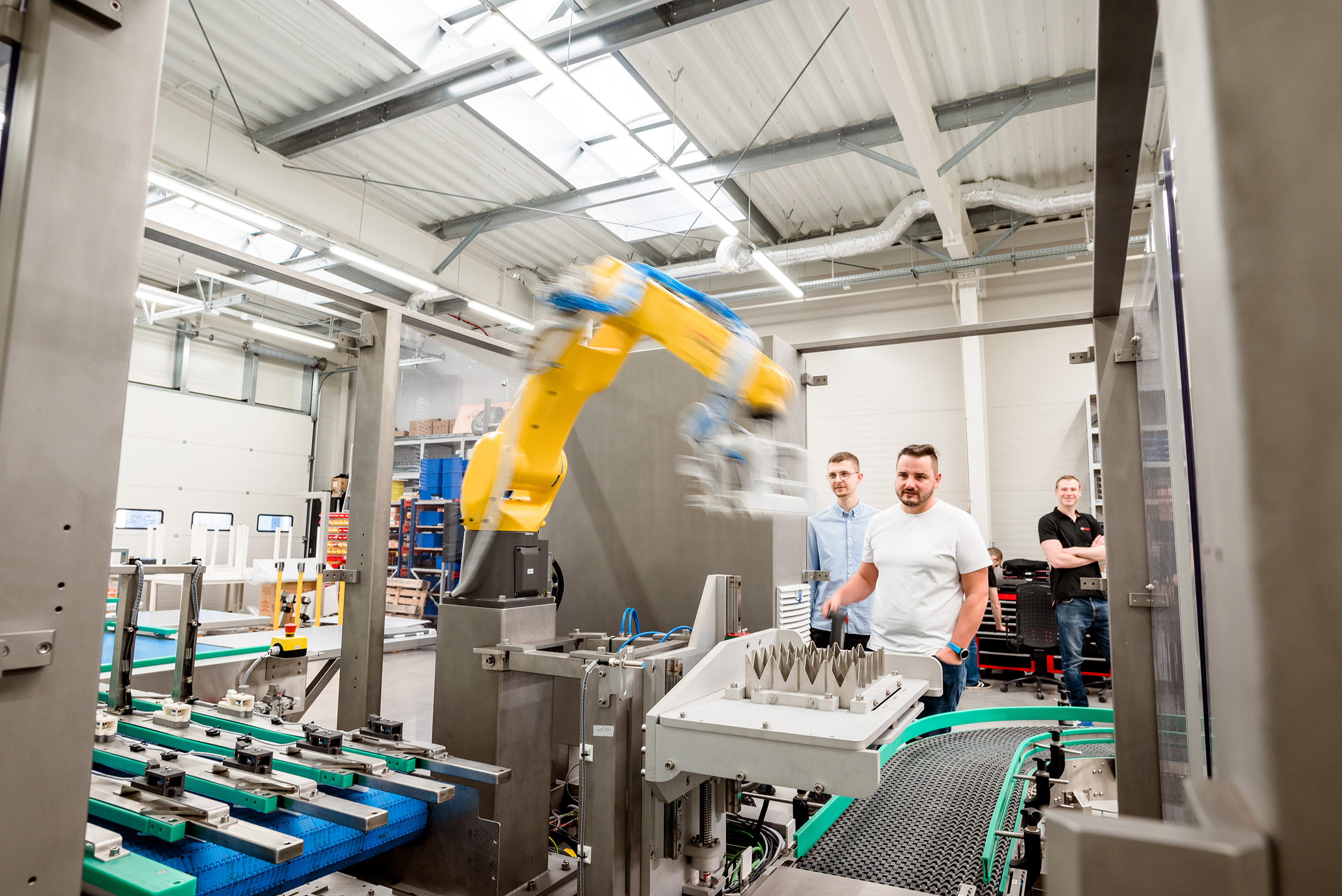
An industrial robot is only one element of the entire production system. A robotic workstation also includes grippers, product transport systems, safety systems, control logic, integration with the production line, and the organization of space around the workstation. If any of these elements is designed incorrectly, it may become the bottleneck of the entire process.
For this reason, companies planning robotization should view a robotic workstation not as a single device but as part of a larger production system. In practice, many problems that appear after automation is implemented result not from the technology itself but from mistakes made during the design stage. It is therefore worth understanding which mistakes occur most often and how they can be avoided.
The implementation of robotization often begins with the question: Which robot should we choose? In reality, however, a much more important question is: What does the process we want to automate actually look like?
A robot can perform movements with very high precision and repeatability, but its effectiveness always depends on the conditions in which it operates. If products are supplied irregularly, internal transport cannot keep up with delivering components, or the workspace is poorly organized, even the most advanced robot will not achieve the expected productivity.
Therefore, the design of a robotic workstation should start with a thorough understanding of the production process. The product flow, production line speed, product variability, and all tasks performed by operators should be analyzed. Only on this basis can a technological solution be designed that truly improves production.
In practice, this means that the robot should be selected to fit the process — not the other way around.
One of the most common mistakes made when planning robotization is focusing exclusively on the device itself. Companies analyze robot parameters, compare manufacturers, and consider technical capabilities while overlooking a detailed analysis of the production process.
However, a robot never operates independently of its environment. Its task is to perform a specific operation at a specific point in the production line. If the process is not well understood beforehand, there is a high risk that the designed workstation will not match real operating conditions.
For example, a robot may be designed to pack products of a certain size, while in reality the line handles several packaging variants. Another issue may be an incorrect estimate of production speed, which can lead to bottlenecks.
To avoid this mistake, the design of a robotic workstation should begin with process analysis. It is worth carefully examining the product flow on the line, determining the actual production pace, and identifying areas where the greatest time losses occur.
Only then can the requirements for the robotic workstation be properly defined.
In many robotization projects, the greatest attention is given to the robot itself, while the end-of-arm tool — the gripper — is treated as a secondary element. In practice, however, the gripper very often determines the efficiency of the entire workstation.
The gripper is responsible for direct contact with the product. It must pick up, move, and place items in a specific way. If its design is too heavy, the robot must move more slowly. If the grip on the product is unstable, errors or downtime may occur.
Another common issue is the lack of flexibility in the gripper design. In many production plants, packaging variants, carton sizes, or product configurations change. If the gripper is designed for only one type of item, every production change may require additional modifications.
For this reason, gripper design should be treated as one of the key elements of the entire project. It should take into account not only current production requirements but also possible changes in the future.
A robot can perform its work very quickly, but its efficiency always depends on how products arrive at the workstation and what happens to them after the operation is completed.
One common issue in robotization projects is the lack of synchronization between the robot and the product transport system. In practice, this means the robot waits for items to arrive or has nowhere to place finished products.
Such situations lead to downtime that significantly reduces the efficiency of the entire production line. In extreme cases, the robot works only part of the time and spends the rest of the shift waiting.
Therefore, the design of a robotic workstation should consider the entire material flow — both before and after the robot. The way products are supplied, the transport between production stages, and potential buffer areas should all be analyzed.
This approach helps avoid situations where the robot is technically well designed but poorly integrated into the overall process.
Another frequently encountered issue is improper planning of the space around the robotic workstation. In many production plants, space is limited, so designers try to minimize the footprint of the new workstation.
Although this may seem beneficial from the perspective of factory layout, a workspace that is too tight can make operation, maintenance, and future modifications more difficult.
Problems may also arise regarding workplace safety. A robotic workstation must meet specific requirements related to safety systems, safety zones, and operator access.
Therefore, when designing a robotic workstation, it is important to consider not only the minimum space required for the robot to operate but also service space, material supply logistics, and the possibility of expanding the system in the future.
In many automation projects, there is a temptation to assume the maximum possible robot performance. Technical specifications often present very short cycle times that theoretically allow impressive production results.
In reality, however, the actual cycle time of a robotic workstation depends on many factors. These include product gripping time, robot movements, product placement, and potential delays caused by material transport.
If the workstation design is based on overly optimistic assumptions, there is a risk that after implementation the system will not achieve the expected productivity. This may lead to the need for additional project modifications or even the reorganization of the entire production line.
Therefore, when planning robotization, it is worth relying on realistic production scenarios and considering potential changes in work organization.
Most errors in robotization projects share a common source — a lack of thorough process analysis before the investment begins.
Before implementing a robotic workstation, it is worth carefully analyzing how the production line operates, how materials flow, and what tasks are performed by operators. Such an audit helps identify areas where the greatest time losses or organizational problems occur.
Based on this analysis, a technological solution tailored to the real needs of the plant can be designed. In many cases, the process analysis itself allows improvements that increase production efficiency even before automation is implemented.
Only the next step should be the design of the robotic workstation and the selection of appropriate technologies.
A robotic workstation is much more than just an industrial robot. The success of the entire project depends on how all elements of the system are designed — from the gripper, through product transport, to the organization of the workspace.
The most common problems in robotization do not result from technological limitations but from mistakes made during the design stage. Companies that invest time in thoroughly analyzing their production processes and properly designing robotic workstations are far more likely to achieve their intended investment goals.
Robotization does not start with choosing a robot.
It starts with understanding the process that needs to be improved.
Don’t want to make these mistakes?