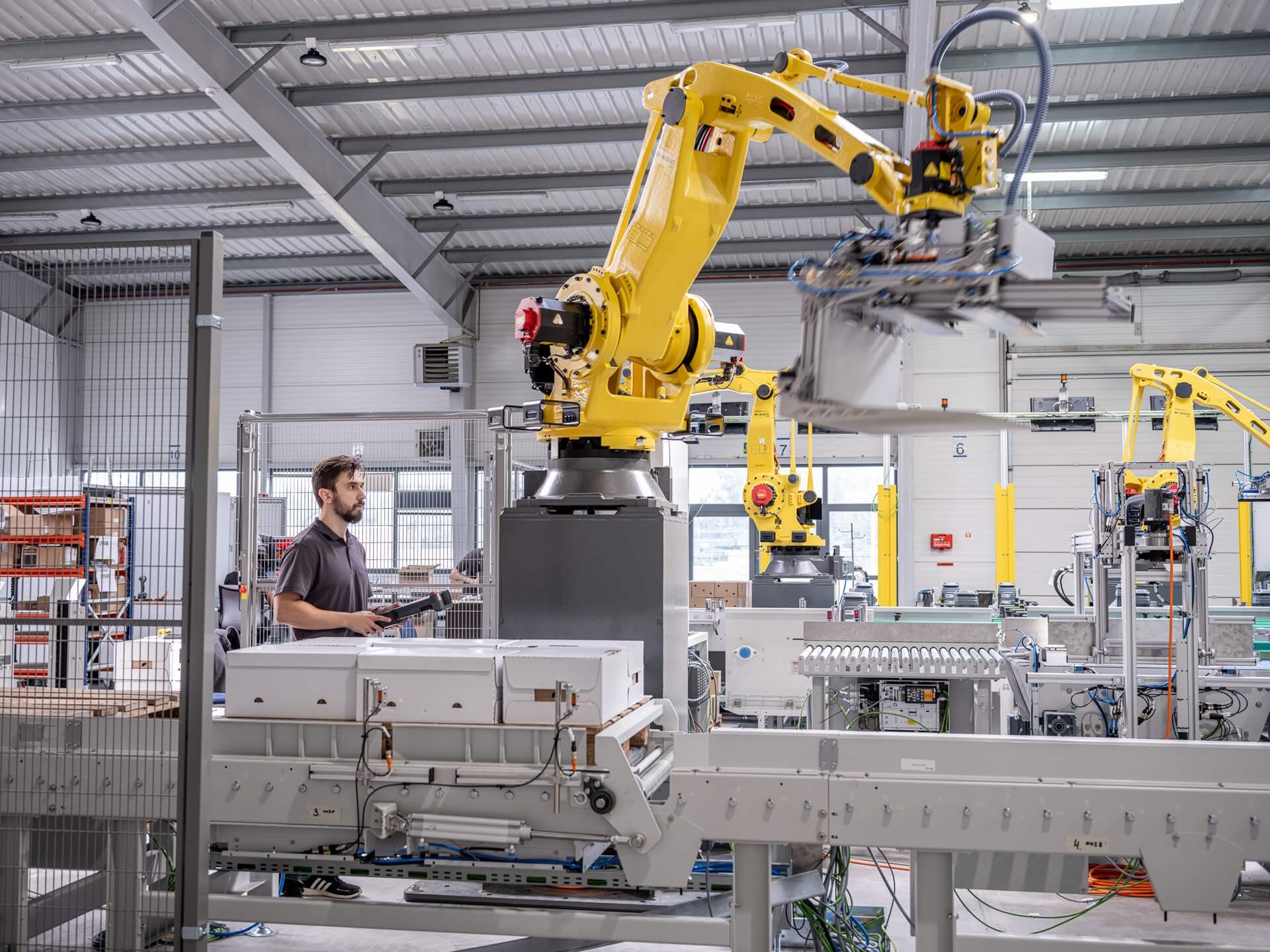
In many manufacturing companies, the topic of robotization still triggers mixed reactions. For some, a robot in the factory is a natural step in the development of the business; for others, it is a costly experiment that may bring more problems than benefits.
This is understandable. Implementing a robotic system is an investment that often involves significant financial resources, changes in work organization, and the need to adapt technology to existing production processes. It is therefore not surprising that many production managers and business owners approach the topic with caution.
In practice, however, the question should not be “Is a robot in the factory risky?” but rather “Does robotization make real business sense in this particular process?” In many cases, a well-planned implementation is not an experiment but a carefully considered investment decision based on data analysis and production needs.
Although industrial robots have been present in factories for many years, in many companies they are still seen as solutions intended mainly for the largest plants. Particularly in small and medium-sized manufacturing companies, decisions about robotization are often postponed due to various concerns.
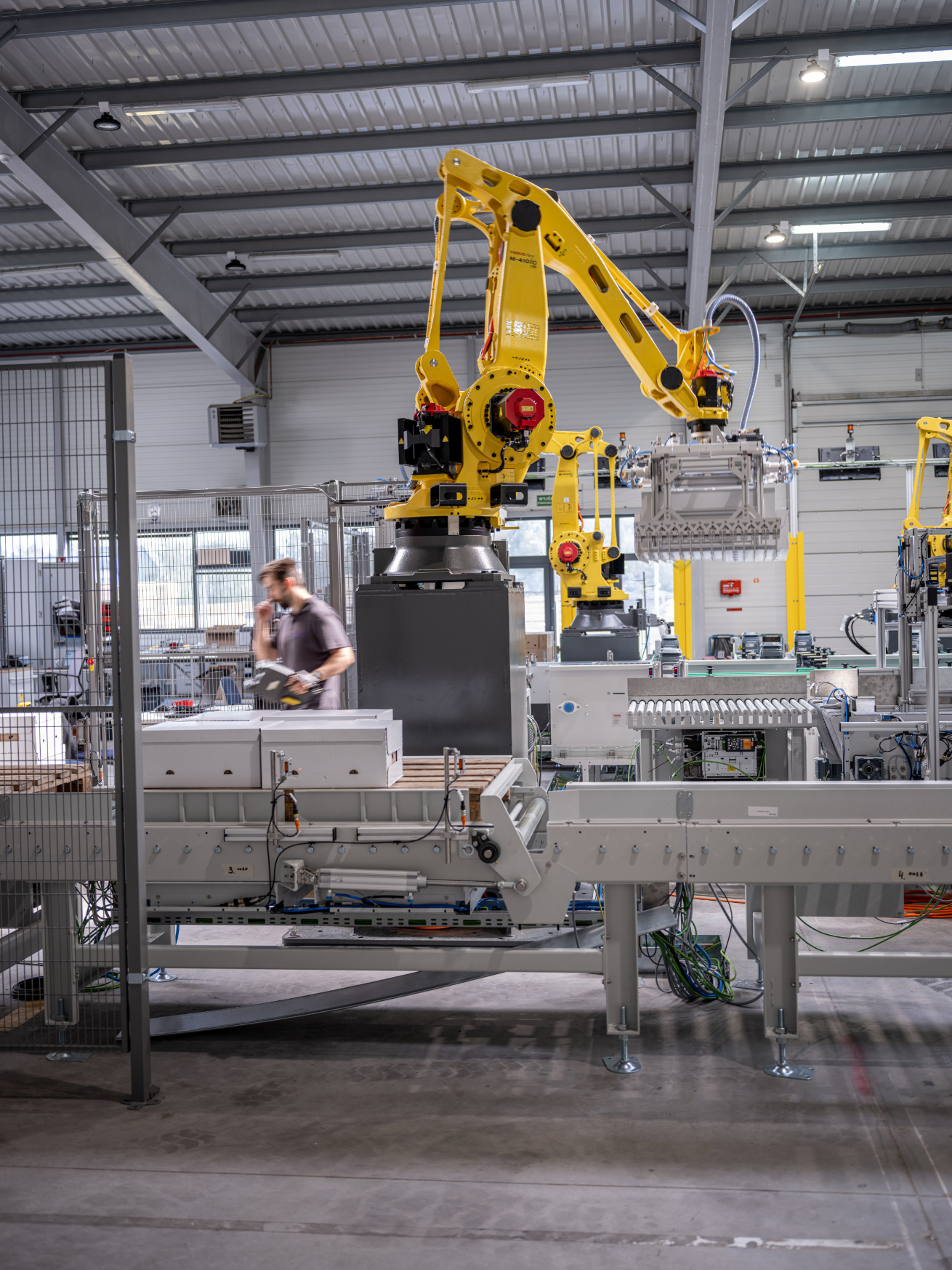
One of the most common concerns is, of course, the cost of investment. Purchasing a robot, designing a workstation, integrating it with the production line, and training staff can represent significant expenses. For many companies, the natural question arises: will this investment actually pay off?
Another source of uncertainty is the risk that the solution may not fit the production process. Every factory has its own specifics—different products, different work organization, and different production speeds. Implementing technology that has not been properly matched to real production conditions can indeed lead to problems.
There are also concerns related to work organization after implementation. Will employees be able to operate the new system? Will it be necessary to hire specialists? Will the production line need to be stopped for a long time?
Additionally, there is a common belief that robotization only makes sense for very large production volumes. As a result, many companies assume their scale of operations is too small for the investment to be profitable.
In practice, some of these concerns are justified. However, this does not mean that robotization always involves high risk. What matters most is how the decision to implement it is made.
Robotization can turn out to be an unsuccessful investment when the decision to implement it is made without proper analysis of the production process.
One of the most common mistakes is introducing automation simply because competitors are doing it or because the technology seems modern. In such situations, it is easy to forget the most fundamental question: what specific problem is the robot supposed to solve?
Risk also arises when a company focuses only on the device itself. An industrial robot is only one part of the entire system. The efficiency of a robotic workstation also depends on elements such as the gripper, product transport systems, workspace organization, and integration with the existing production line.
Another issue is the lack of realistic calculations of costs and potential benefits. If the investment decision is based only on a general belief that “a robot should be profitable,” the risk of disappointment is much higher.
Sometimes companies also attempt to automate a process that first requires reorganization. If there is organizational chaos at a workstation, a robot will not solve all the problems—it may simply replicate them in a more automated way.
That is why a well-planned robotization project should begin not with choosing a robot but with a thorough analysis of the production process.
Robotization stops being an experiment when it results from specific production needs and is supported by data analysis. In such situations, the robot becomes a tool that helps organize the process and increase its predictability.
One signal that automation may make sense is high process repeatability. Robots perform best where the same tasks are repeated many times in a similar way—for example, product packaging, carton palletizing, or machine tending.
Another important factor is workforce challenges. In many factories, it is increasingly difficult to find employees for simple, repetitive tasks performed in shift systems. Automation can reduce dependence on labor availability and stabilize the production process.
Robotization also makes sense where manual work begins to limit the performance of the entire line. If operators cannot keep up with packaging products or preparing cartons for palletizing, even a modern production line may operate below its potential.
Quality and process consistency issues can also be a strong argument. Robots perform tasks in a stable and predictable way, reducing errors caused by fatigue or inattention.
Under such conditions, a robot is no longer a technological curiosity—it becomes a practical tool for achieving operational goals.
Before deciding to implement an industrial robot, a company should answer several key questions about its production process.
The first question concerns the specific problem that needs to be solved. Is the goal to increase line efficiency? Reduce errors? Or decrease reliance on manual labor?
The next step is analyzing the current costs of the process. It is worth calculating how much manual operation of a given workstation costs, what downtime costs look like, and how often errors or production losses occur.
It is also important to understand production variability. Do the products have similar dimensions and weights? How often does the product mix change on the line? The answers help determine how flexible the robotic workstation must be.
Another important consideration is whether automation can be implemented gradually. In many factories, the first step is introducing a single robotic workstation that takes over the most repetitive tasks.
Such an approach allows the company to gain experience with new technology and gradually expand automation to other areas of production.
In practice, industrial robots most often appear in processes where manual work is highly repetitive and time-consuming.
One typical application is palletizing and depalletizing products. Stacking cartons or bags on pallets requires significant physical effort and repetitive movements. Robots can perform these tasks around the clock while maintaining a consistent work pace.
Another area is product packaging and kit assembly. In industries such as food or chemicals, products often need to be arranged in cartons in specific ways or combined into product sets. Robots help maintain consistency even when there are many product variants.
Robots are also increasingly used for machine tending, such as servicing injection molding machines or CNC machines. Automating such operations helps maintain production continuity and reduce downtime between machine cycles.
In many factories, robots also support internal material transport or the preparation of products for further production stages.
In all these cases, the key factor is the repeatability and predictability of the process.
Although robotization is often associated mainly with reducing manual labor, its impact on plant operations is much broader.
One of the most important benefits is greater production predictability. Robots perform tasks consistently according to programmed sequences, making production planning and internal logistics easier.
Automation also helps maintain a stable production pace. Unlike manual workstations, robots are not affected by operator fatigue or staff turnover.
Another important aspect is improved safety and ergonomics. In many factories, robots take over tasks that involve lifting heavy elements or performing repetitive movements for long periods.
Robotization can also make it easier to scale production. If a company increases its production volume, a robot can handle more products without requiring proportional increases in employment.
One of the most common mistakes when evaluating robotization investments is focusing solely on the price of the robot itself.
In practice, what matters is the entire solution, not just a single device. The efficiency of a robotic workstation depends on elements such as the gripper, product transport systems, integration with the production line, and proper safety measures.
A cheaper robot does not always mean a lower overall investment cost. If the system is not properly designed, it may limit line performance or cause frequent downtime.
That is why evaluating robotization profitability requires a broader perspective. The real question is not only how much the robot costs, but also how much the lack of automation costs in a given process.
Many companies fear that implementing robotization means completely rebuilding the factory. In practice, however, automation often begins with one well-chosen workstation.
The first robot may handle product packaging, palletizing cartons, or transporting items between production stations. As production grows and the company gains experience, the system can gradually expand with additional automation elements.
This approach helps reduce investment risk and better align technological development with the real needs of the company.
A robot in the factory becomes a risky experiment when its implementation results from impulse or from the general belief that automation is simply a fashionable direction of development.
However, when the decision is based on process analysis, real production needs, and clearly defined business goals, robotization can become one of the most predictable development steps in a manufacturing company.
In many cases, the goal is not to replace people with machines, but to organize production line operations and increase process stability.
That is why more and more companies treat robotization not as a technological experiment, but as a well-considered business decision that helps prepare production for the years ahead.