Labor costs are rising. There is a shortage of workers. And the pressure on efficiency isn’t easing. In this reality, automating the final stages of production—packaging, marking, palletizing—is no longer something for “someday.”
But not all automation is equal. Sooner or later, every technical director faces a concrete question: a traditional cartoning machine or a robot? And this is where the real conversation begins, because the answer depends on factors worth checking before signing any offer. In this article, we show—using real examples—when a robot turns out to be the better investment. And we honestly explain when it doesn’t.
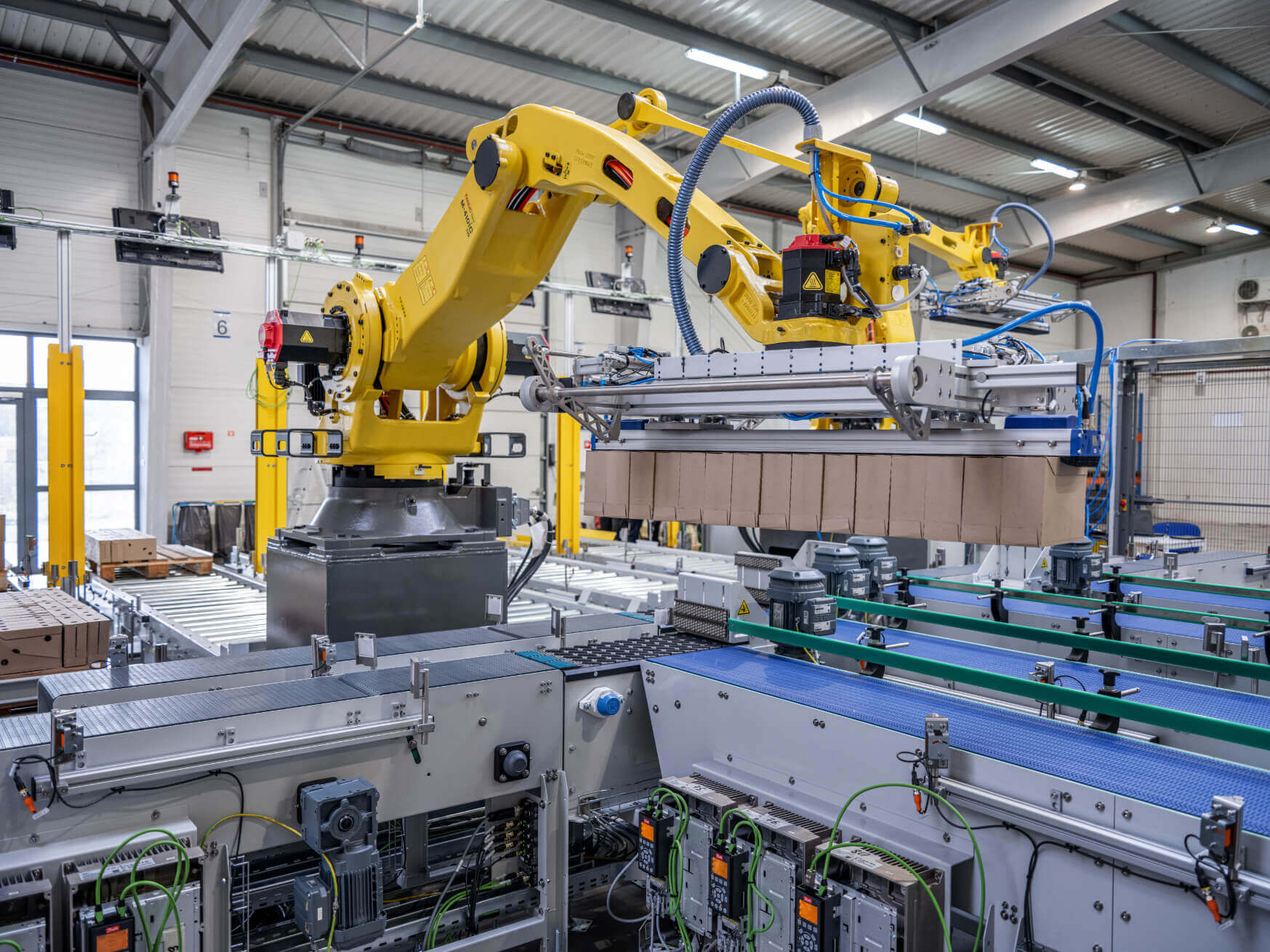
Traditional cartoning machines are dedicated systems based on mechanical cams, guides, and rigidly set grippers. For a single, specific product and one packaging format, they are unbeatable in terms of pure speed. If your plant produces one type of product around the clock and the format changes once a year, a cartoning machine may be sufficient—and there is no point in replacing it.
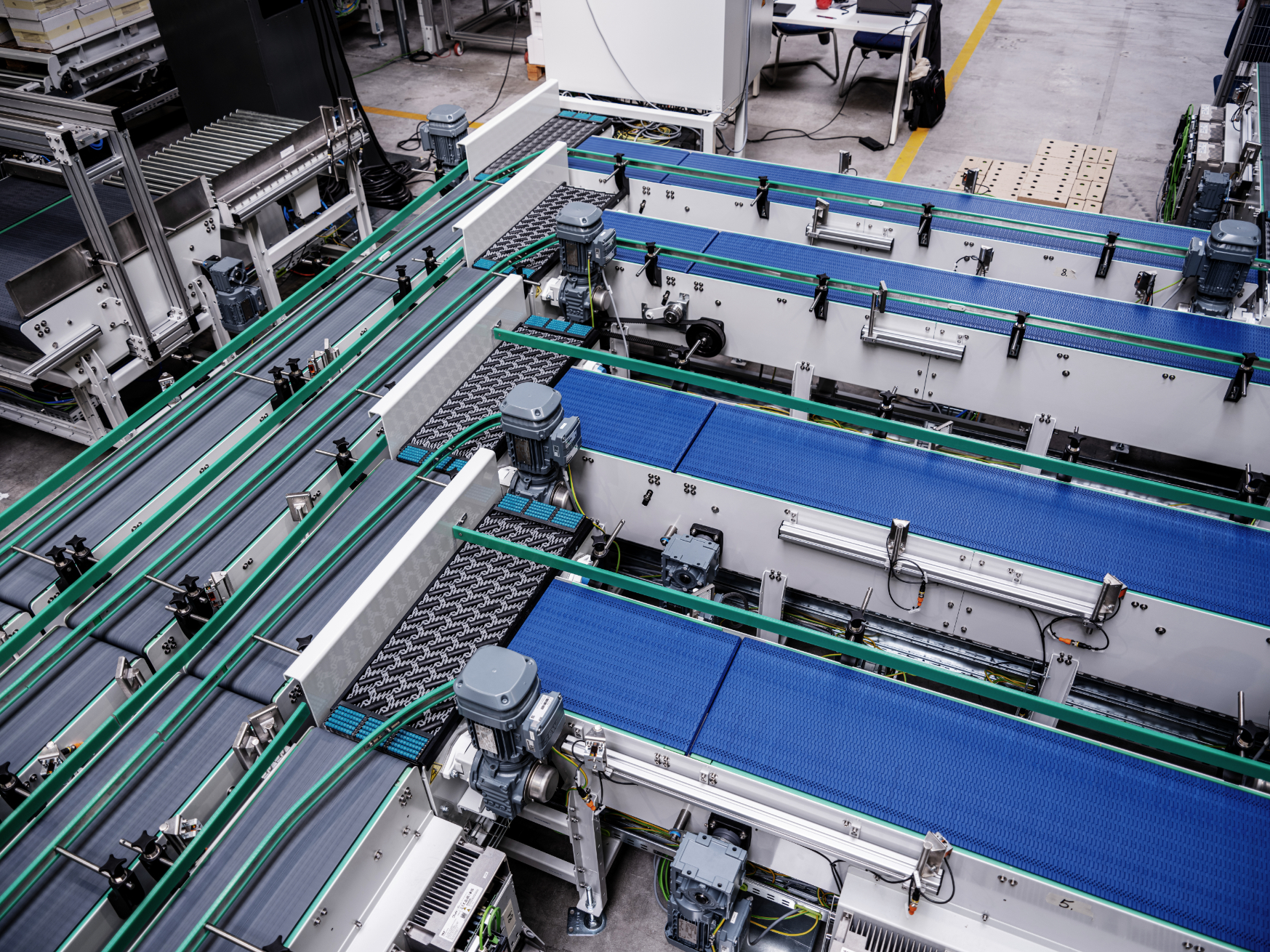
The problem appears in multi-variant production. There, rigidity becomes a burden. How much does a format change really cost? With production at 60 packages per minute and a 2-hour changeover downtime, a plant loses 7,200 production cycles with each change. With three changes per week, that’s over one million lost units annually—before anyone even issues a service invoice.
Why does the robot win? 4 arguments backed by numbers
This question comes up in almost every conversation with technical directors—and for good reason. Downtime during implementation is a real cost no one wants to add to the project budget.
At Hitmark, such implementations typically take 6 to 14 weeks (from contract to production start). The process is divided into three simple stages:
For standard industries such as FMCG, cosmetics, and household chemicals, the timeline is usually closer to the lower end.
For comparison, implementing and calibrating a new dedicated cartoning machine rarely takes less than 8–12 weeks—and that’s only for the first format. Each additional change requires separate service time.
| Situation | Case Packer | Robot |
| 1 SKU, high volumes, stable format | Optimal | Unnecessary flexibility |
| 5+ SKUs, frequent format changes | Costly downtime | Changeover in 5 minutes |
| Delicate or irregular products | Risk of damage | Adaptive gripper |
| Limited factory floor space | Large line footprint | 3D operation, small footprint |
| Integration with quality control (vision) | Requires separate station | Built into the cycle |
| Planned changes in production profile | Risk of asset write-off | Reprogrammable |
Do you see your plant appearing in more than one row on the right side? We will tell you directly whether robotization makes sense in your case and when it will pay off.
In most plants, packaging and marking are two separate worlds. The machine finishes its job, the product moves along a conveyor, and only later reaches the printer. Each such “handoff” creates risk: a moment of inattention is enough for the print to be misaligned, cut off, or skipped entirely during a batch change.
At Hitmark, we combine these stages into a single system. As an official integrator of FANUC robots and a supplier of Hitachi systems, we don’t place two machines side by side—we synchronize them. This approach isn’t offered by companies focused solely on robotics or only on printing.
How does it work in practice? A CIJ or laser printer communicates directly with the robot controller. The robot actively positions the product under the print head, ensuring the perfect angle and distance regardless of packaging shape. The result? The separate marking station disappears, along with the need for an additional quality control operator.
The difference is most noticeable with frequent product changes. When the robot switches to a new product, the marking system automatically loads the correct template—no manual clicking through printer menus and no risk of error. In industries like food or pharmaceuticals, where a single date error can trigger a full product recall, this level of certainty is often more valuable than speed alone.
Not every facility needs a robot. We say this openly, because an audit that ends with “a cartoning machine is enough” is also a success—it builds trust.
But if your production is evolving, your product range is growing, and customer requirements change every year, robotization provides resilience that no rigid machine can offer. And it pays back faster than most technical directors expect at the start of the conversation.
It depends on many variables: the number of robot axes, the type of gripper, and whether a vision system is included. Our projects typically range from tens of thousands to several hundred thousand PLN. We always start with a free audit—any estimate given “by eye” without seeing your line would simply be unreliable.
Not always. A traditional cartoning machine still wins where you have a single fixed format and very high volumes, where fractions of a second determine profitability. However, a robot is unmatched when you have more than 3–5 different products, irregular packaging shapes, or you know your assortment will change in the near future.
At Hitmark, we typically deliver within 6–14 weeks—from contract signing to full production launch. In industries such as FMCG, cosmetics, or chemicals, we aim for the lower end (around 6 weeks). For comparison: with a traditional cartoning machine, setup and calibration for a specific product rarely take less than 8–12 weeks. With a robot, you simply start faster.