If you’ve ever wondered what really determines the pace of your production line, you might be looking in the wrong place. Most of the attention in automation planning goes to the robot: its payload, reach, repeatability. Meanwhile, it’s often the gripper—that few-kilogram component at the end of the arm—that ultimately determines how many cycles per hour the entire system actually delivers.
In this article, we’ll show why gripper design is not a minor technical detail but a strategic engineering decision—and how specific design choices translate into measurable production results.
Imagine a line where a robot is mechanically capable of 1,200 cycles per hour. But if the gripper requires 2 seconds to close and verify grip confirmation via a sensor—rather than 0.3 seconds—the actual throughput drops to a fraction of the robot’s potential.
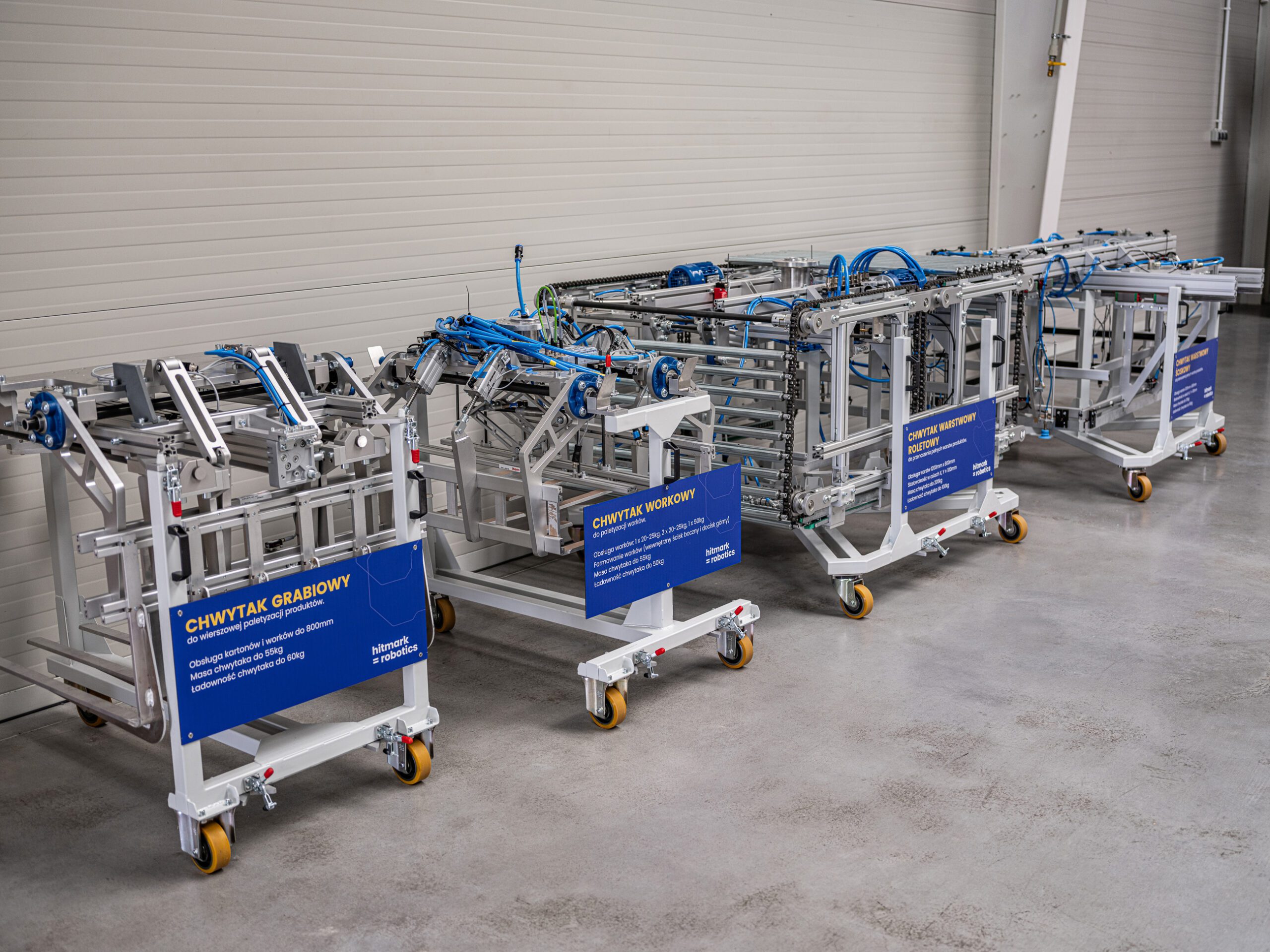
This is not a theoretical case. Researchers publishing on ScienceDirect point out that robotic line output can be determined more by robot handling capabilities than by process times themselves—and a key factor is gripper handling time.
At the same time, experts from Automate.org emphasize that multi-gripper end-of-arm tooling (EOAT) can dramatically increase throughput. They also note that using lightweight materials—such as graphite or aluminum instead of heavy steel—directly improves cycle speed.
One of the most underestimated variables in gripper design is weight. A heavier gripper means greater inertia—the robot must accelerate and decelerate more slowly to avoid exceeding allowable wrist loads. In practice, this increases cycle time.

Data presented in a webinar by Siemens showed that replacing a traditional gripper with a lightweight, additively manufactured version reduced energy consumption by 54% and CO₂ emissions by 82% in one production facility.
This is not just an environmental benefit. Lower energy consumption at the same number of cycles means reduced OPEX. Faster motion dynamics—enabled by a lighter tool—translate directly into shorter cycle times.
According to Automation World, in many automotive plants, grippers weigh more than the parts they handle. This is especially common when processing lightweight sheet metal components with massive steel EOAT systems.
One of the best-documented methods of reducing cycle time—without changing the robot—is implementing a dual gripper. Instead of placing a finished part, returning for a new one, picking it up, and loading it into the machine, the robot performs unloading and loading in a single motion.

A real-world example speaks for itself.
The Swedish company FT-Produktion implemented a system using a UR5 cobot and a dual RG2 gripper from OnRobot. The dual-gripper configuration reduced cycle time by 12 seconds per operation. Over a batch of 150,000 parts, this translated into 500 machine hours saved.
Twelve seconds per cycle may sound minor—but across hundreds of thousands of operations, it becomes the difference between a profitable and an unprofitable automation project.
Similarly, Robotiq cites the example of Glidewell Laboratories, where adding a UR5 cobot to serve four CNC machines reduced total production cycle time from 27 hours to 18 hours—a 33% improvement without changing the machines themselves.
Not every gripper performs well in every environment. Incorrect gripping principles are not abstract risks—they have concrete production consequences.

One user of vacuum grippers described a case where the system worked perfectly on clean sheet metal but quickly lost reliability when surfaces were contaminated with cement residue. The gripping principle simply did not match the environmental conditions.
Today’s market offers tools dedicated to specific materials and geometries:
For decades, pneumatic grippers were the industry standard—fast, simple, reliable. However, more manufacturers are switching to electric drives, and it’s not just a trend.
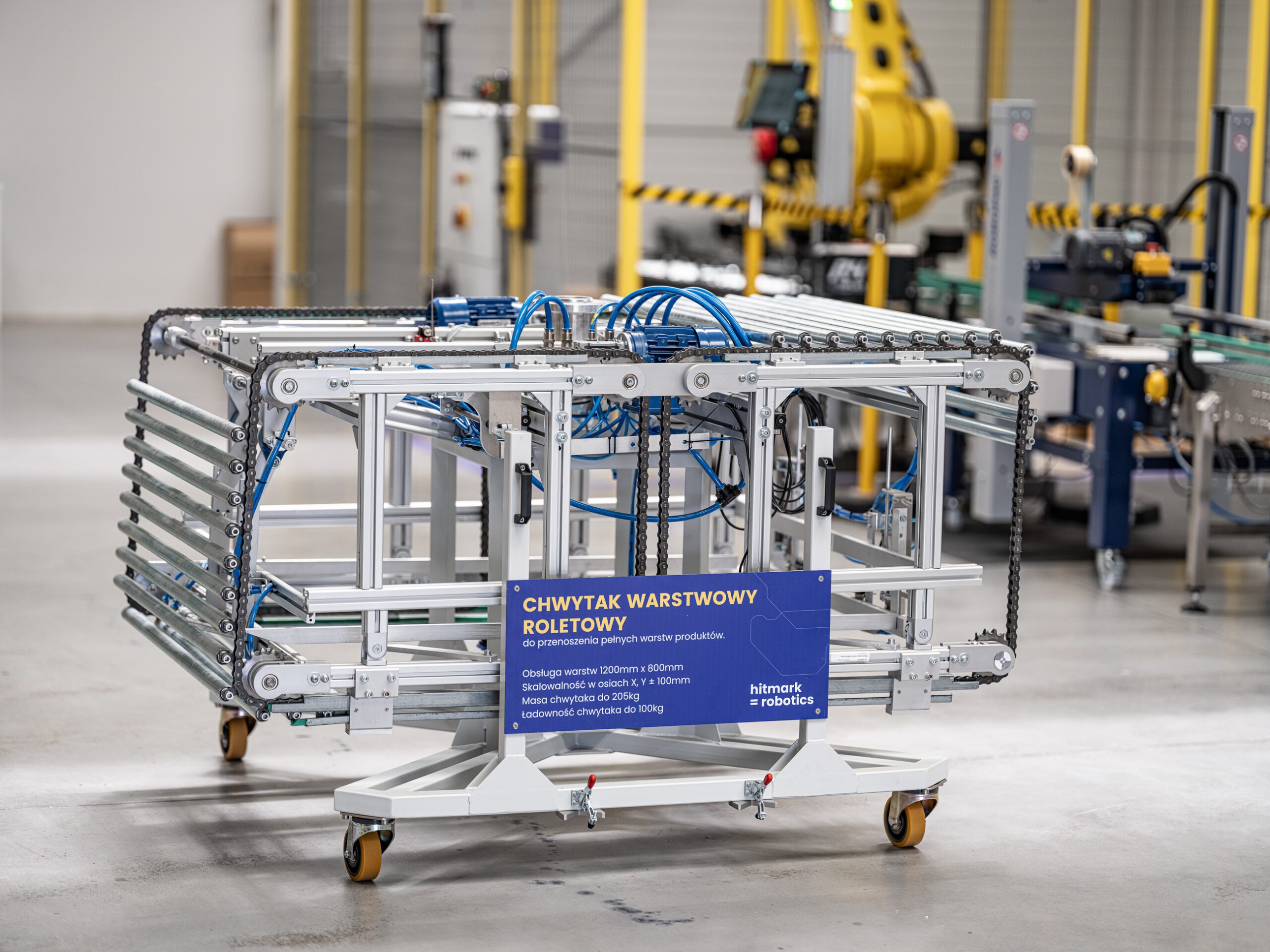
According to Robotiq, servo-electric grippers allow partial finger closure during robot motion toward the pick location—effectively reducing gripping time without increasing robot speed.
On the pneumatic side, optimization opportunities still exist. Experts from ASSEMBLY Magazine report that installing point-of-use pneumatic valves directly at the gripper—rather than in a central manifold—can reduce gripper cycle time by up to 50%. A relatively small investment can unlock seconds in every cycle.
An emerging trend worth noting is shape memory alloy (SMA) technology. Researchers from Saarland University and ZeMA have developed grippers based on SMA actuators that consume 90% less electrical energy than conventional systems and require no external sensors—the sensing properties are embedded in the actuator material itself.
Not every implementation requires complex engineering. Sometimes, selecting the right tool is enough.

The Australian company Designed Mouldings automated manual insert placement using a cobot equipped with the VGC10 from OnRobot. The system now processes 20,000 parts in 24 hours—three times faster than the manual process—while reducing material waste by 1–2% and achieving an expected ROI within six months.
This example reflects the logic we apply when designing palletizing and picking systems: the gripper is not an accessory—it is a core part of the solution that must be aligned simultaneously with the product, the environment, and the required throughput.
You can find more information about our cobots at: hitmarkrobotics.com/cobot
Before deploying a robotic system on your line, ensure that the gripper design addresses the following:

The gripper is the only component that physically touches every product passing through your automated line. Every second lost to inefficient motion, incorrect gripping principles, or excessive mass multiplies across millions of annual cycles.
Effective automation doesn’t start with “Which robot?” but with “How should we design the end-of-arm tool so it doesn’t become the bottleneck?”
At Hitmark Robotics, we design robotic systems end-to-end—from process analysis and gripper engineering to line integration and service. We know that the difference between a project that pays back in 18 months and one that underperforms often lies in this single component.
Want to see how an optimally designed gripper could improve your line’s performance? Contact us—we’ll start with a free process analysis.