Selling products through large retail chains today requires compliance with specific rules regarding how goods are prepared for sale. For manufacturers, not only product quality matters, but also the way products are packed, assembled into cartons, and prepared for transport and shelf display.
In practice, this means greater attention to the final stage of production. This is the moment when products are placed into collective packaging, counted, arranged, and prepared for shipment. If this part of the process does not function smoothly, the entire production line can slow down.
This challenge is no longer limited to large factories. It increasingly affects small and medium-sized manufacturing plants that want to expand their sales through retail chains. For many of them, packaging automation is becoming a way to organize production line operations and adapt manufacturing processes to market requirements.
The final stage of production includes packing products, assembling cartons, and preparing goods for transport. In many plants, this part of the process has a major impact on the efficiency of the entire line.
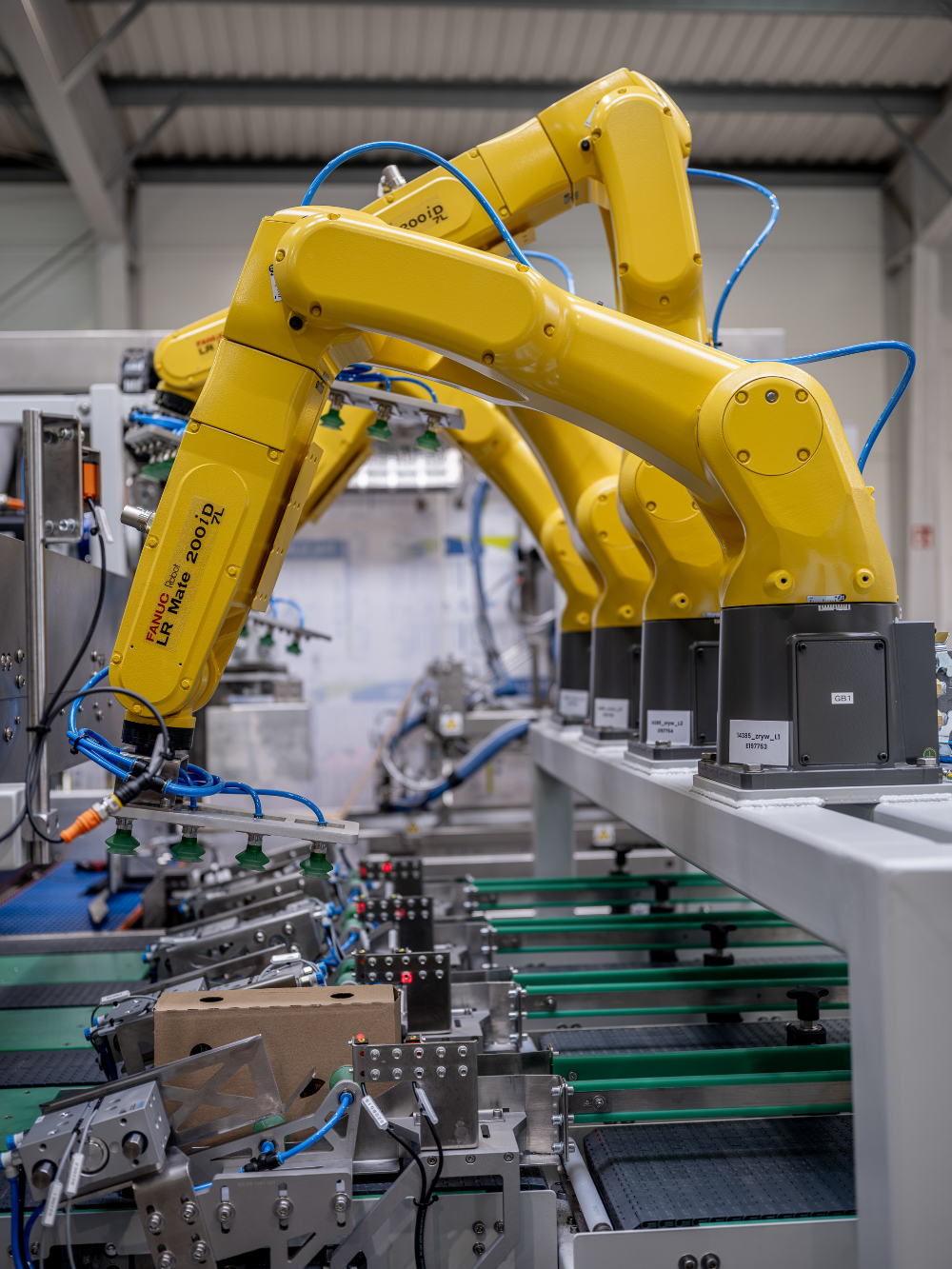
Modern production lines increasingly use industrial robots that take over repetitive tasks, such as placing products in cartons or preparing packages for further shipment. As a result, the packaging process becomes more organized and the risk of errors is significantly reduced.
A good example is when retail chains require mixed-product cartons. This means that a single carton contains different variants of the same product, such as several flavors. At larger production scales, manually assembling such sets becomes difficult to maintain, which is why robots are increasingly taking over the task of arranging products according to a predefined pattern.
Such solutions allow manufacturers to maintain order in the packaging process and more easily meet retail chain requirements.
Some products are particularly demanding in the packaging process. This mainly concerns small individual packages that are packed in large quantities into a single carton.
Examples include sachets used for fruit purées, concentrates, dietary supplements, or cosmetics. Although each individual product is small, the production speed can be very high, and the number of items in a single carton may be large.
An additional challenge is that such packages often move irregularly on the conveyor belt. In these situations, robots equipped with vision systems can recognize the position of a product on the belt and quickly transfer it into a carton.
As a result, the packaging of small products becomes more organized and it is easier to maintain the working pace of the entire line.
Small and medium-sized manufacturing plants often operate under different conditions than large factories. Production is usually more varied, production batches are shorter, and product changes occur more frequently.
In many such companies, packaging is still performed manually. However, with the growing number of product variants and the requirements of retail chains, this can lead to difficulties in maintaining efficiency and consistent performance.
Typical challenges for smaller manufacturers include:
In such situations, even partial automation can significantly improve work organization.
One of the most common concerns among small and medium-sized companies is the cost of automation. In practice, however, automation does not always mean building a fully automated production line.
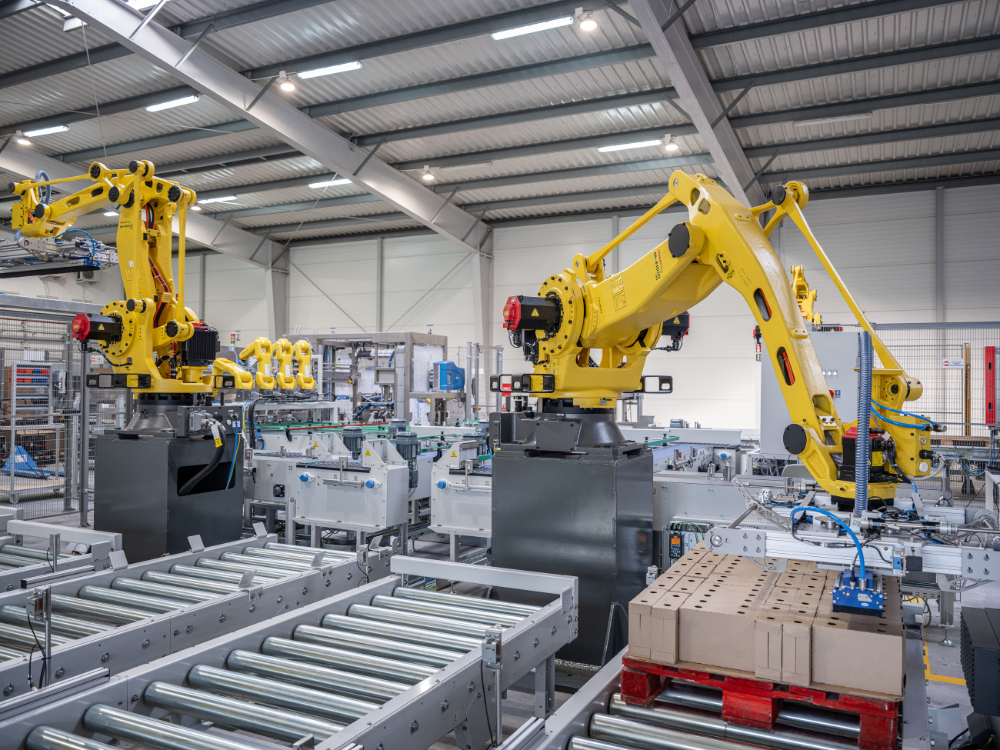
In many plants, the first step is the implementation of a single robotic workstation that takes over the most repetitive tasks. For example, this may be a robot responsible for placing products into cartons, assembling product sets, or preparing cartons for palletizing.
Such solutions can later be gradually expanded. As production grows, additional robots, transport systems, or extra packaging stations can be added.
This makes automation a scalable solution—adapted both to a company’s financial capabilities and to its pace of development.
In practice, automation in small and medium-sized plants most often involves individual robotic stations that take over the most repetitive tasks.
The most common solutions include:
Such implementations do not require rebuilding the entire factory while still significantly improving the final stage of production.
Retail chains today expect manufacturers to prepare products efficiently for sale. This includes the way cartons are assembled, the number of products in a collective package, and the organization of deliveries.

Packaging automation helps maintain order in these processes. Products are packed in a consistent manner, it becomes easier to control the number of items in a carton, and preparing goods for shipment becomes more efficient.
For this reason, more and more companies—both large and small—treat packaging automation as an important step in developing their production and strengthening cooperation with retail chains.